Water Damage Restoration
End-to-end recovery from the first phone call to the final repaint — extraction, drying, sanitizing, and rebuild under one crew.
Learn more
24/7 Emergency
(201) 277-9344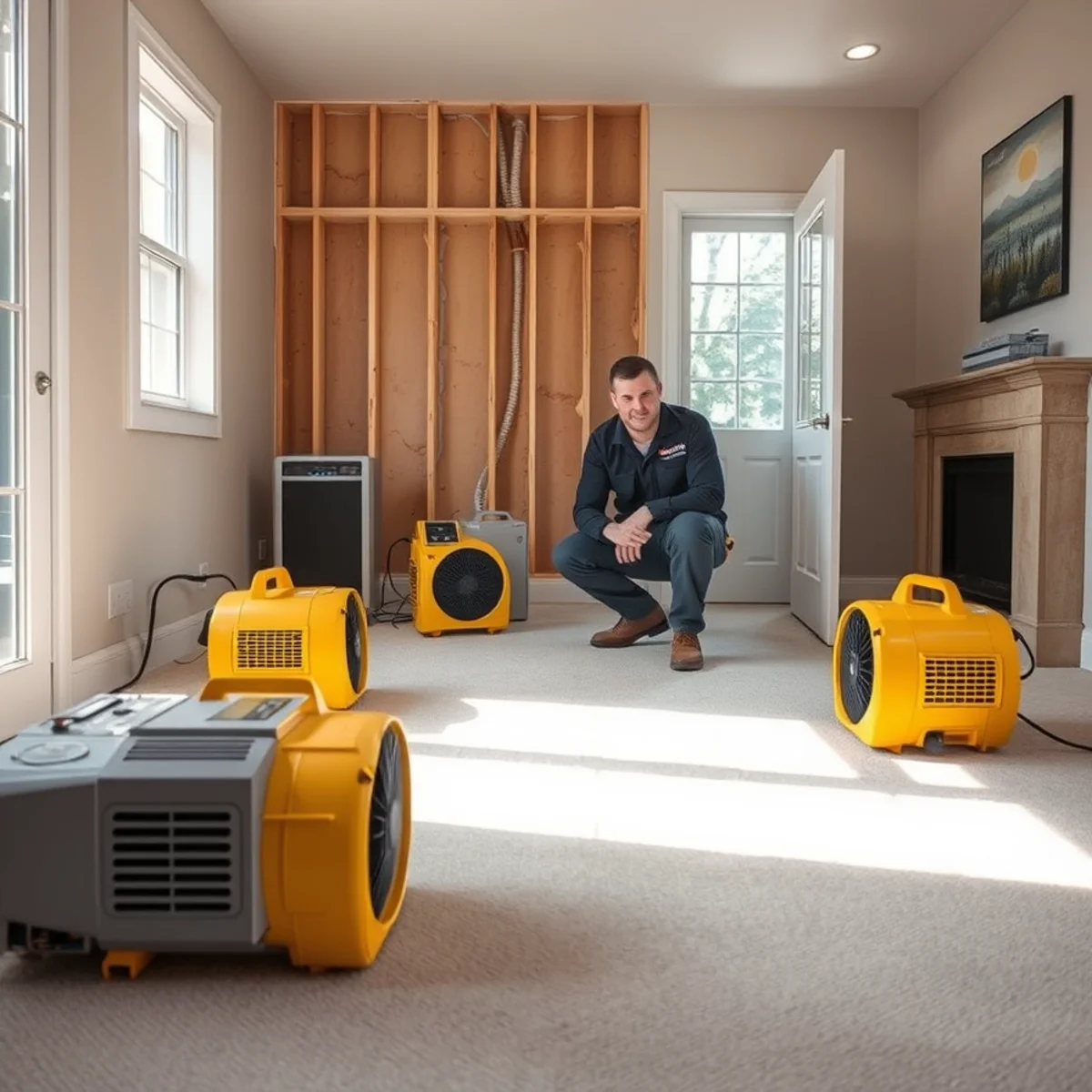
24/7 Emergency Service
This is the phase where jobs quietly go wrong. A house that looks and feels dry can still be well above its normal moisture content inside the walls, and that is exactly the condition mold needs. The only way to know is to measure, daily, against a documented target.
We build a drying plan from psychrometric readings, place equipment to move air where the water actually is, and log every reading until the structure reaches the moisture content of unaffected areas of your own house.
Warning Signs
Residual moisture in a cavity. It goes quiet in dry weather and announces itself every time it rains.
Wood that dried unevenly after being wet. It usually means the cavity behind it dried slowly, from one side only.
Moisture pushing through from behind. Repainting over it fails again every time.
Classic sign of drying too fast on the surface while the subfloor underneath stayed wet.
Wicking that was never addressed. The bottom of a wall cavity is the last place to dry and the first place to grow.
That room is releasing more moisture into the air than the rest of the house. Something in it is still wet.

How It Works
We take readings across affected and unaffected areas. The unaffected readings become the target — a Berkeley house in February has a different normal than the same house in August, and drying to a generic number is meaningless.
Temperature, relative humidity, and grains per pound in the affected space and outside it. This tells us whether the air can actually accept more moisture, which determines equipment selection.
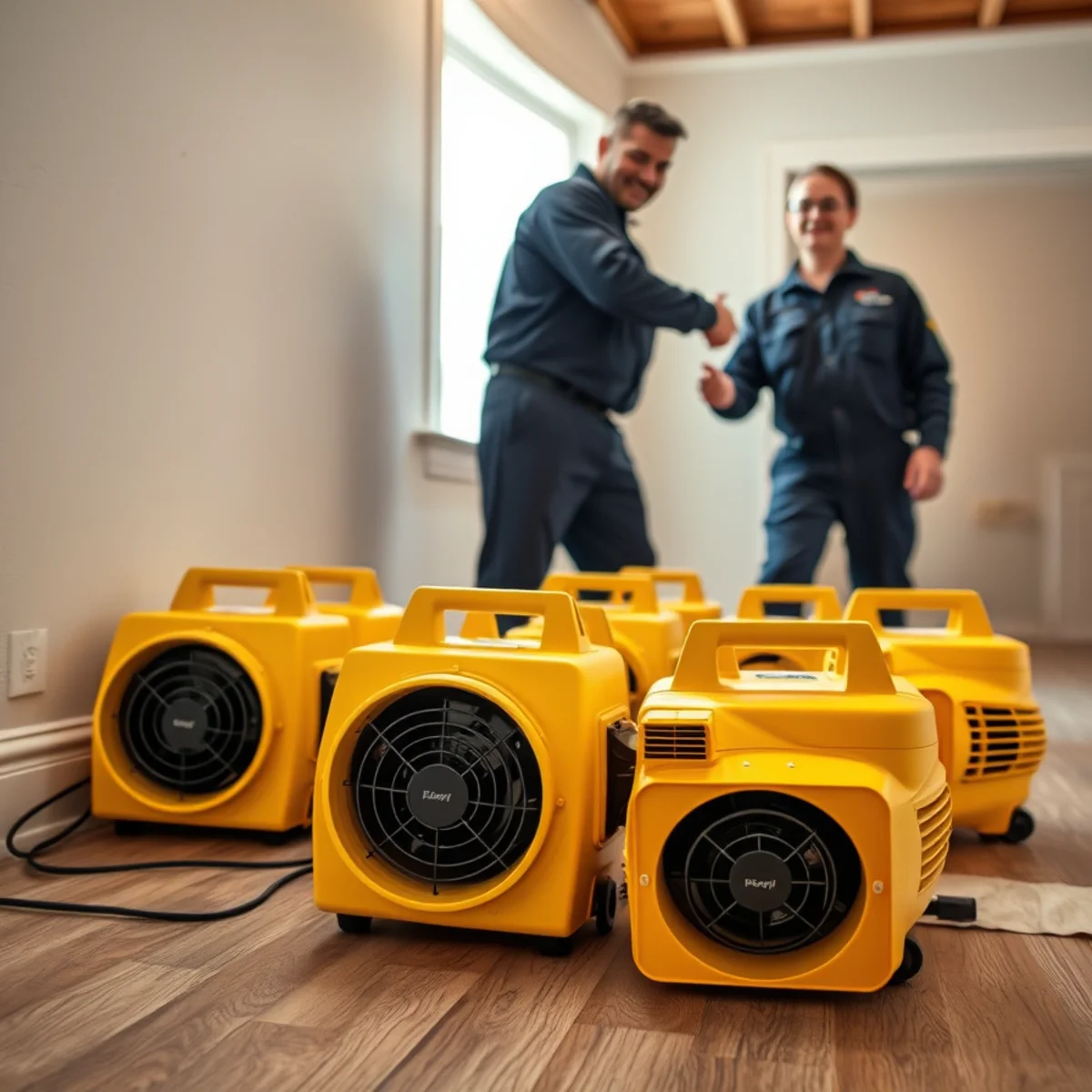
Air movers are aimed at a low angle across wet surfaces to break the boundary layer of saturated air sitting on them. Placement is calculated from affected square footage and the class of water loss, not eyeballed.
Low-grain refrigerant dehumidifiers pull the evaporated moisture out of the air and drain it away. Without this step, air movers just move water from your floor into your walls.
Injection systems for wall cavities, floor mat systems for hardwood, and negative-pressure setups for enclosed spaces let us dry materials in place instead of demolishing them.
A technician takes readings at the same points every day and moves equipment as areas come dry. Every reading is logged with date, location, and value.
Equipment comes out when readings hit the dry standard and hold — not when the calendar says so. You get the complete log.
Evaporation moves water from a material into the air. That is all a fan does. If nothing removes that moisture from the air, relative humidity climbs until evaporation stalls — and meanwhile the humid air is depositing moisture into every dry surface in the house, including walls and framing that were never wet to begin with.
Opening windows is a coin flip that usually loses in Berkeley. From November through March, outdoor air here often sits at 75–90% relative humidity. Bringing it inside adds moisture to a house you are trying to dry. Marine layer mornings do the same thing in summer.
The other thing consumer equipment cannot do is verify. Even if a box fan happened to dry a room, you would have no reading to prove it — which matters if mold turns up in six months and the carrier asks whether the structure was properly dried.
Air movers
Move high-velocity air across surfaces to accelerate evaporation. They dry nothing on their own.
LGR dehumidifiers
Remove the evaporated moisture from the air and drain it. This is the half consumer setups are missing.
HEPA air scrubbers
Filter airborne particulate and spores during the process, which matters on any job past 48 hours.
Moisture meters and thermal cameras
Find the water and prove it is gone. The documentation is as important as the drying.
Aggressive drying can damage the exact materials that make a pre-war Berkeley house worth living in.
Old-growth Douglas fir flooring is dense, tight-grained, and dries slowly. Push it too hard and you get checking and splits that were not there before the loss. Plaster over wood lath needs the lath dried from behind, which usually means working through a small access point rather than blasting the face of the wall. Solid-wood doors and pre-war trim will cup and split if you dry the exposed face much faster than the back.
Our approach on these houses is more dehumidification and less brute-force airflow. It takes a day or two longer and it keeps the material. On a Craftsman with original fir floors, that trade is not close.
Drying is the phase where the difference between companies is invisible while it is happening and extremely visible six months later, when either nothing happened or a wall started smelling. What separates a real dry-down from equipment left in a room is measurement.
We dry to a number, not to a schedule
The target is a moisture content that matches an unaffected part of your own house, not a fixed three days. Equipment comes out when the readings say so, and you get the log that proves it.
Daily metered readings, written down
Every affected material, every day, against the IICRC S500 dry standard. That record is also the document that closes your claim without a supplement argument.
Old houses dried without wrecking them
Old-growth fir, plaster over lath and pre-war trim need dehumidification-led drying, not maximum airflow. Push those materials hard and you trade a water claim for cupped floors and split trim.
We dry cavities, not just surfaces
Wall cavities, subfloor layers and crawl spaces get targeted airflow through small access points rather than a fan pointed at a wall and an optimistic assumption about what is behind it.
Honest Pricing
Equipment count scales with the wet area and the class of loss. More area, more units.
Class 1 is minimal absorption; Class 4 is deeply saturated low-evaporation materials like hardwood, plaster, and concrete. Class 4 needs specialty equipment and more days.
Carpet and drywall release moisture readily. Solid hardwood, plaster, and concrete hold it and dry on their own schedule.
A wet February week in Berkeley works against you. Higher outdoor humidity means the dehumidifiers work harder and longer.
Drying a crawl space or an enclosed cavity requires containment and sometimes negative pressure, both of which add setup.
Most residential drying runs three to five days. We pull equipment the day readings hit standard, because leaving units running to pad an invoice is exactly the thing adjusters audit for — and we would rather have the referral.
Questions
Three to five days for a typical residential loss. Hardwood, plaster, and concrete can take a week or more. We take readings daily and you will see them — if it is going slower than expected, you will know why.
Yes, continuously. Shutting them off overnight lets humidity rebound and effectively erases part of the previous day. They are loud, and we position them to keep bedrooms as usable as possible, but they need to run.
Somewhat — dehumidifiers and air movers draw real power for the days they run. On an insurance claim the power consumption is a documented, reimbursable line item; ask us and we will include it in the estimate.
We compare readings in the affected material to readings from the same material in an unaffected part of your house. When they match and hold steady, it is dry. You get the full daily log — location, date, and value for every point.
Often, yes. Injection drying pushes conditioned air into the cavity through small holes behind the baseboard, and negative-pressure systems pull air through from the other direction. It saves the wall and it saves the repaint. Deep saturation or contaminated water still needs the wall opened.
What Neighbors Say
Sample content. These are illustrative examples, not customer reviews. Replace them with verified reviews from your Google Business Profile before launch — see src/data/testimonials.ts.
“A supply line let go in the upstairs bathroom of our 1920s place around midnight. Someone actually answered the phone, walked me to the shut-off in the dark, and had a crew here inside the hour. They saved the fir floors, which I had written off.”
“The crawl space had been wet for years and we had no idea. They found it, dried it, put in a vapor barrier, and explained exactly why our downspouts were the actual culprit. No upsell to anything we did not need.”
“Sewage backup in the downstairs unit during a storm. They set containment before touching anything, documented every step for the insurance company, and the claim went through without a single argument.”
Where We Provide This Service
Keep Reading
End-to-end recovery from the first phone call to the final repaint — extraction, drying, sanitizing, and rebuild under one crew.
Learn moreTruck-mounted extraction that pulls hundreds of gallons an hour — the single highest-leverage hour of the entire job.
Learn moreFind it, contain it, remove it — and fix the moisture source, or it comes straight back.
Learn more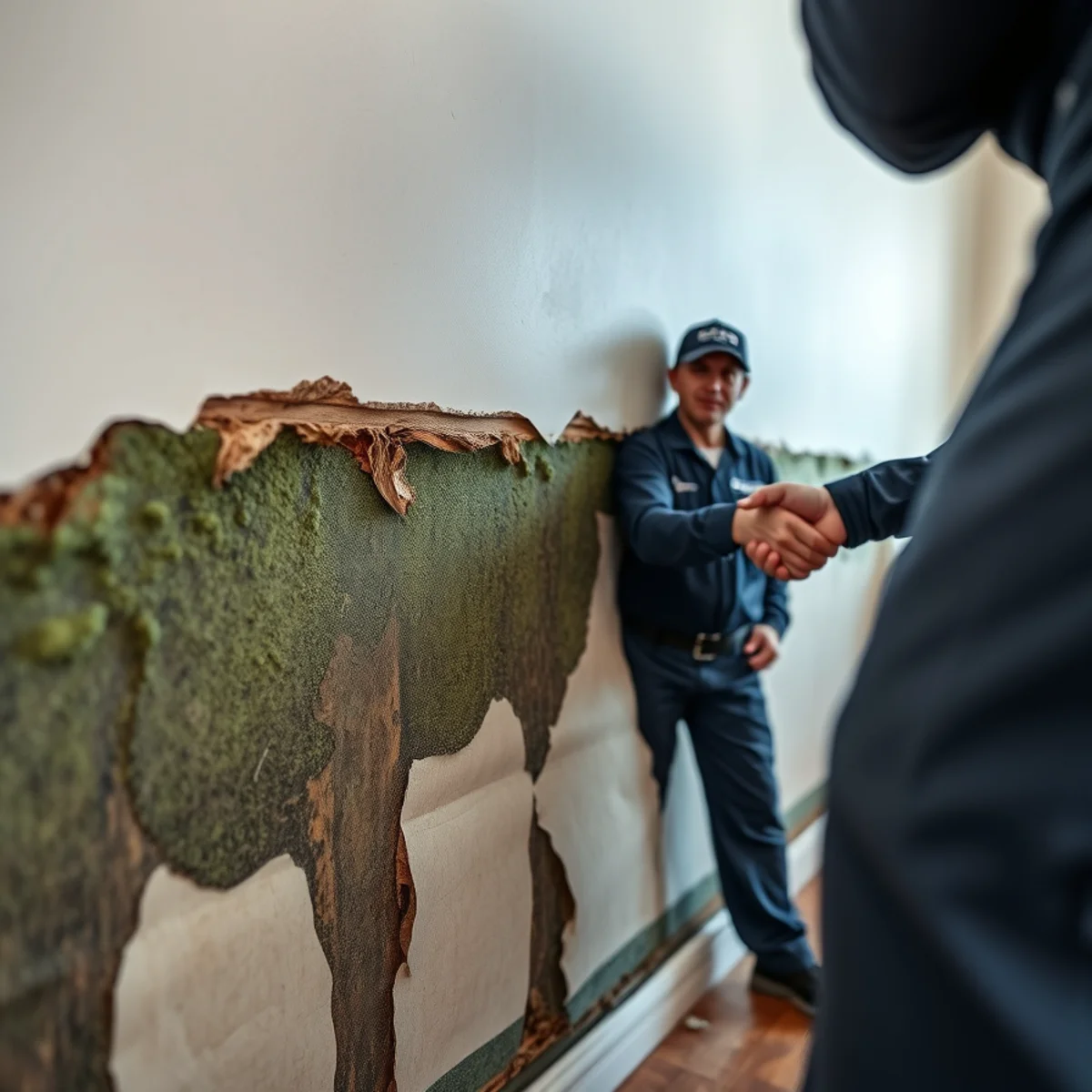 Mold & Health
6 min read
The 24-to-48-hour rule is real, but it is a starting gun rather than a deadline. What actually happens hour by hour.
Read article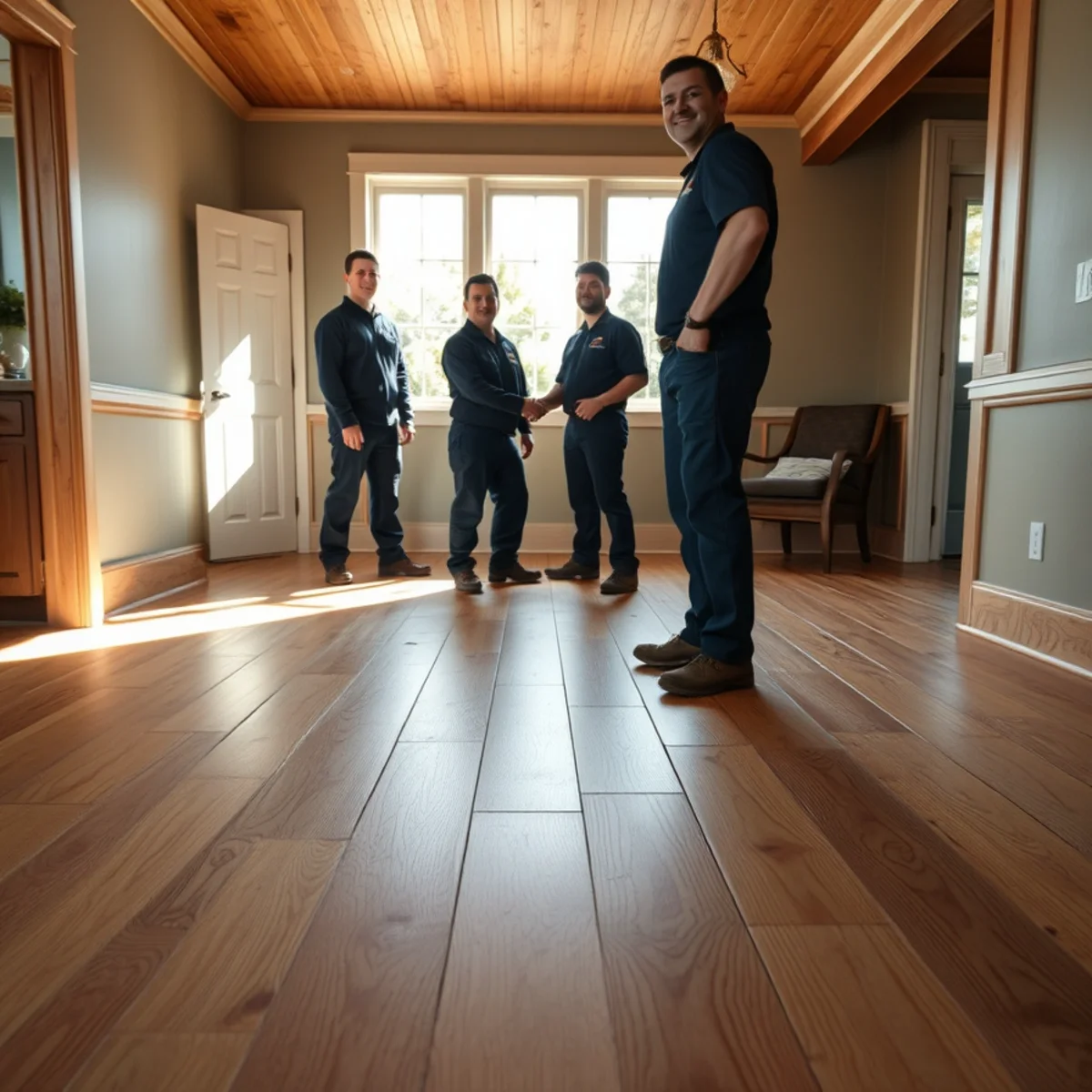 Room & Material
7 min read
Most cupped floors flatten on their own. The mistake that guarantees they will not is sanding them too early.
Read articleA live local dispatcher answers day or night, and we get a crew to most Berkeley addresses in 60 to 90 minutes. Free inspection, written estimate, and we bill your insurance directly.