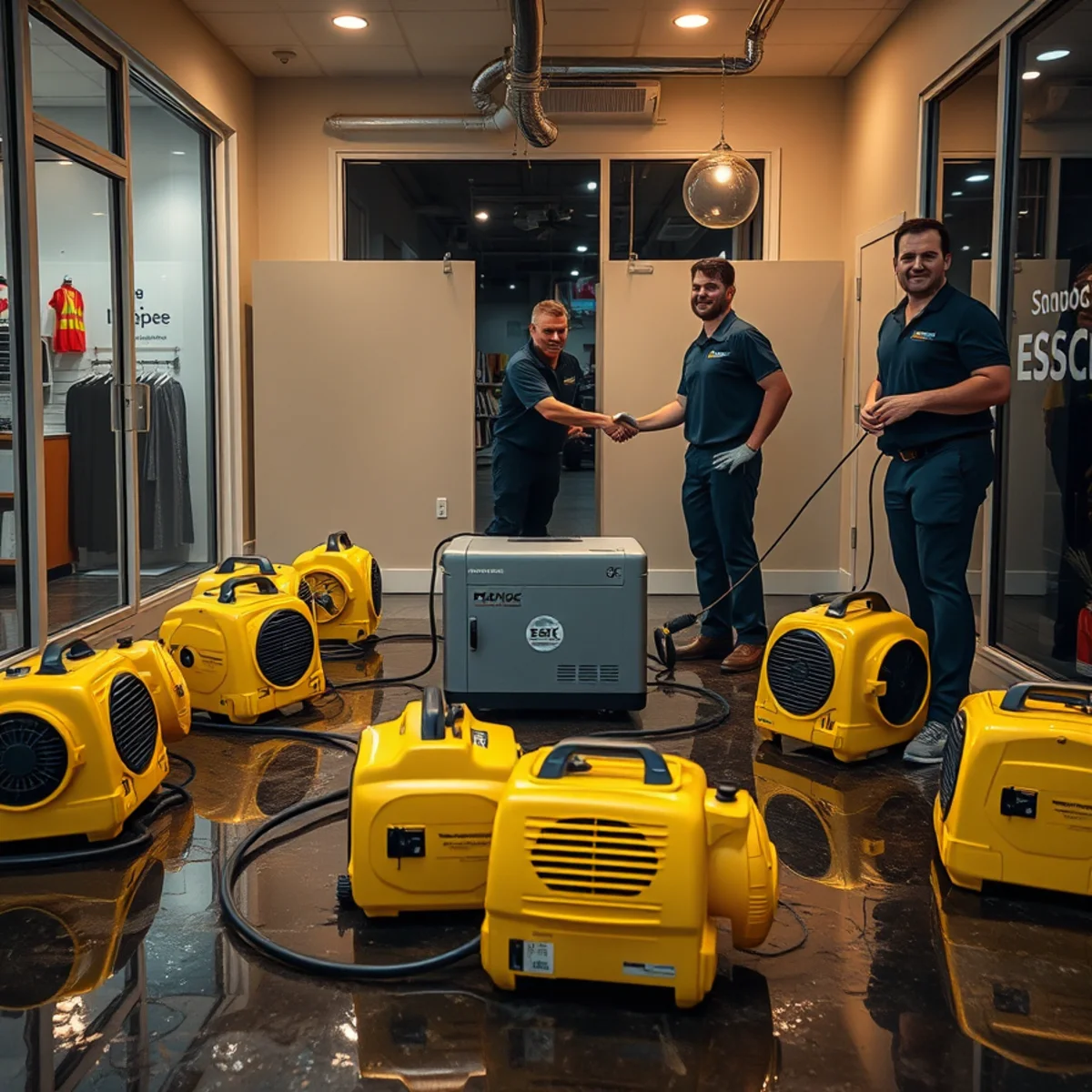
Commercial Restoration
Every hour closed is revenue gone — we phase the work and run crews after hours to keep you trading.
Learn more
24/7 Emergency
(201) 277-9344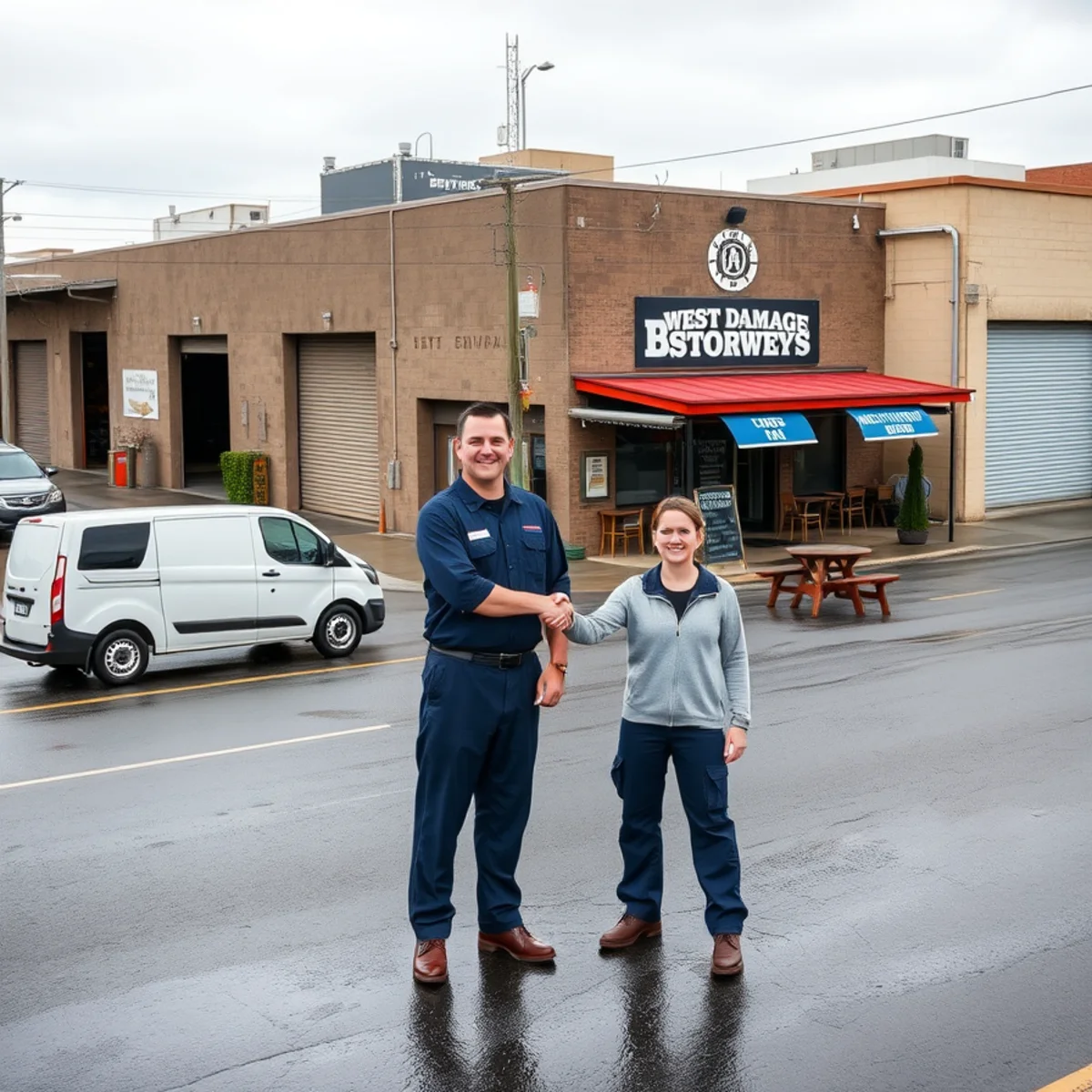
Gilman District · 24/7 Emergency Service
Almost everything here is commercial or mixed-use, which changes both the technical problem and the priorities. For a business in this district, downtime costs more than the restoration does.
We reach it in fifteen to twenty-two minutes and schedule around your operating hours as a default.
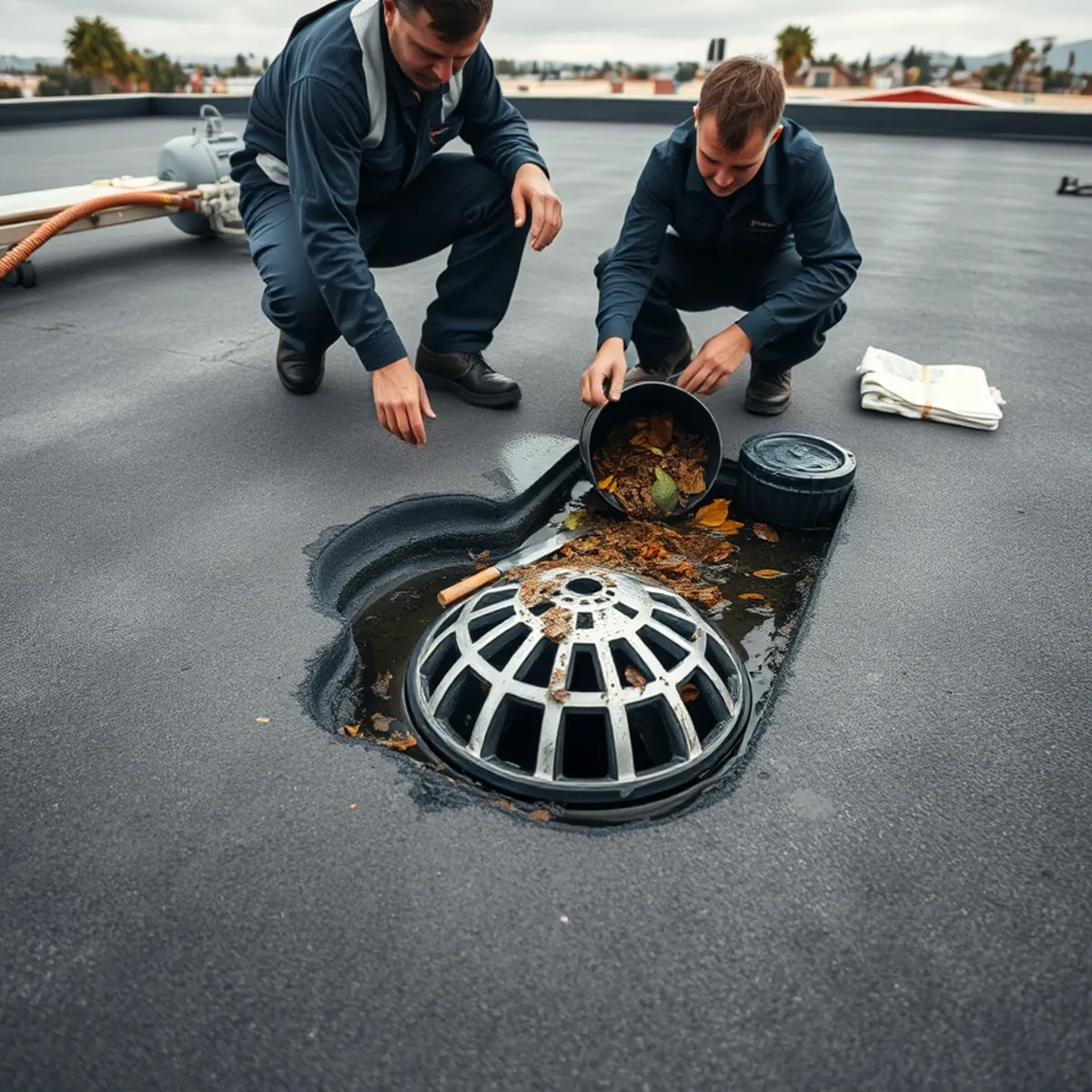
Low-slope and flat roofs dominate this district, and they drain through internal roof drains rather than over the edge. When a drain blocks — leaf litter, debris, a failed strainer — water ponds on the membrane and finds the nearest penetration, which is invariably above occupied floor space. Under a sustained atmospheric river, that is our most common commercial call here.
Slab-on-grade construction on a high water table produces a second, quieter problem: moisture migrating up through concrete. It reads as a flooring failure — adhesive letting go, coatings blistering, a persistent damp smell — when it is actually a vapor problem, and getting that diagnosis right saves people from replacing a floor twice.
Elevation is low and the ground is flat, so street flooding during heavy rain is a live risk, and anything that arrives at ground level is contaminated storm water.
The commercial fixtures add their own: floor drains, grease interceptors and process water lines in food and beverage operations.
Drying a commercial building is technically similar to drying a house and logistically nothing like it. Concrete slabs and masonry are slow-release materials that need specialty equipment and a longer schedule than wood framing, and open industrial volumes make containment and dehumidification harder to size.
We phase these jobs so the parts of your space that can stay operating do. Overnight and weekend crews, hard containment where customers or staff can see it, and production or service areas restored ahead of storage.
For breweries, taprooms and food operations, any Category 2 or 3 water in a production or storage area needs documented decontamination before reopening — that is a health department requirement, not a preference, and we produce the documentation for it.
We also keep the daily operational record — dates, affected square footage, what was unusable and when — that a business interruption claim depends on. It is usually the largest part of a commercial claim and the part most often under-documented, because nobody starts keeping the log until it is too late.
The Gilman District is flat roofs, concrete slabs and low ground occupied largely by businesses, where the cost of a water loss is measured in closed days rather than in materials.
We phase the work so you keep trading
Containment around the affected area and crews after hours, because for most tenants here the closure costs more than the restoration does.
Flat roofs fail at the details
Ponding, blocked internal drains and failed flashing at penetrations — not broad membrane failure. That is where we look first.
Slabs hold moisture and show it late
Concrete releases moisture slowly, which is why coatings blister and flooring lifts months after everyone assumed the problem was solved.
Fifteen to twenty-two minutes via Gilman Street
Quick access from Downtown, with equipment sized for commercial floor areas.
Areas and landmarks we cover in and around Gilman District:
Local Questions
Often not entirely. We contain the affected zone and phase the work so unaffected areas keep operating, with overnight and weekend crews where that helps. Full closure is normally only necessary with Category 3 water in a production or food-handling area, or where a structural or electrical hazard makes occupancy unsafe.
Almost certainly moisture migrating up through the slab. On low ground with a high water table, vapor moves through concrete continuously and lifts coatings and adhesives from underneath. Replacing the floor without addressing the vapor drive means doing it again — the fix is a moisture test and an appropriate vapor barrier or breathable system.
That is almost always moisture vapour transmission through the slab rather than a leak above it. On low ground with a high water table, and especially where the slab was poured without an effective vapour barrier beneath, ground moisture moves continuously up through the concrete. When it reaches a coating or an impermeable floor covering it has nowhere to go, and the pressure lifts the material — which is why it reappears after every recoat. The fix is not another coat: it is a calcium chloride or relative humidity test on the slab, then a moisture-mitigation primer system specified to the reading.
Usually not entirely. We contain the affected area under negative pressure so the rest of the unit stays usable, run the loud and dusty phases outside your operating hours, and sequence the work so the areas you most need come back first. The exception is a Category 3 loss, or a situation where the electrical in an affected zone has to stay isolated — in those cases we will tell you plainly rather than working around a hazard, and we document the reason in writing, which is also what supports any business interruption claim you make.
Services in Gilman District
Every hour closed is revenue gone — we phase the work and run crews after hours to keep you trading.
Learn more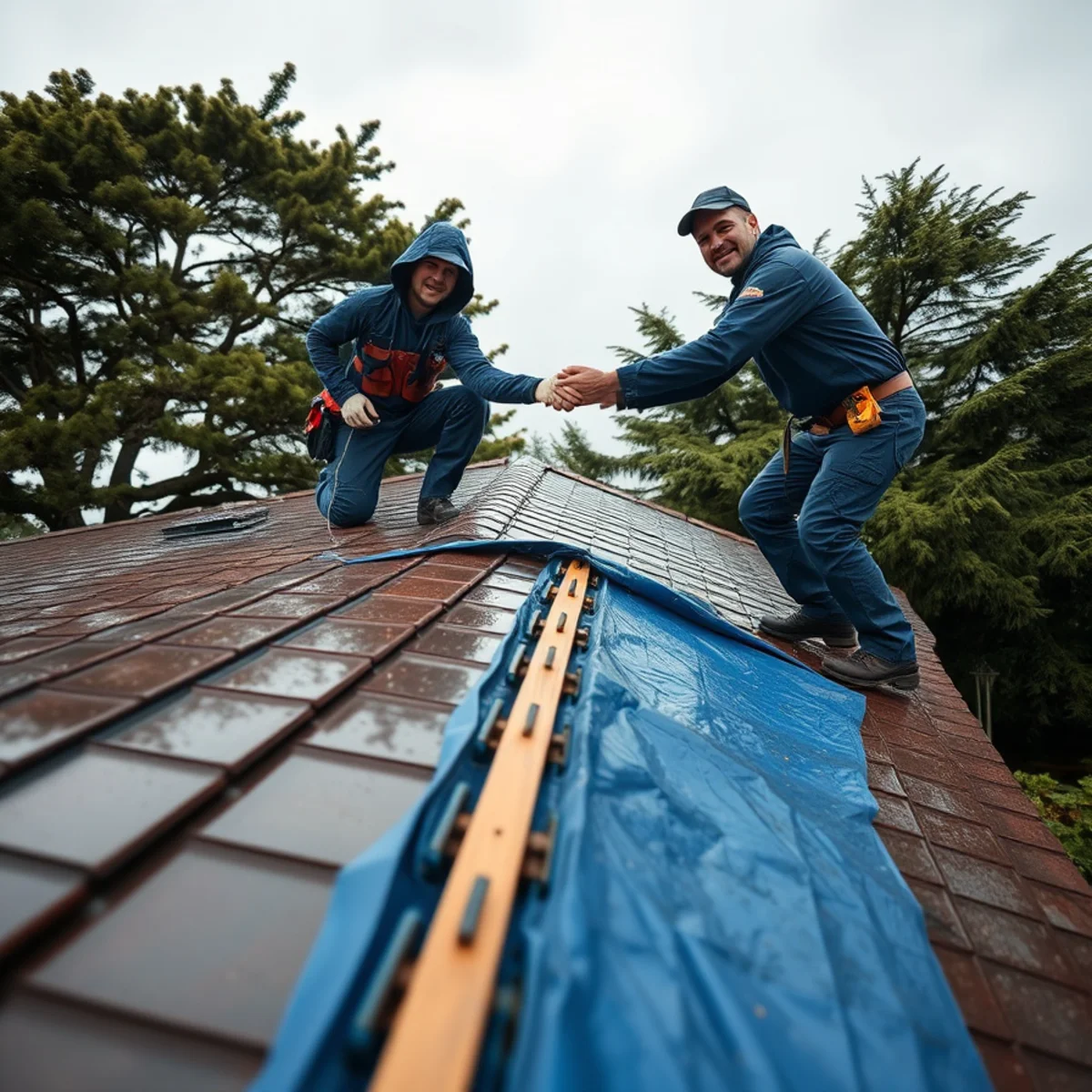
Emergency tarping and board-up the same night, then the full repair once the weather clears.
Learn more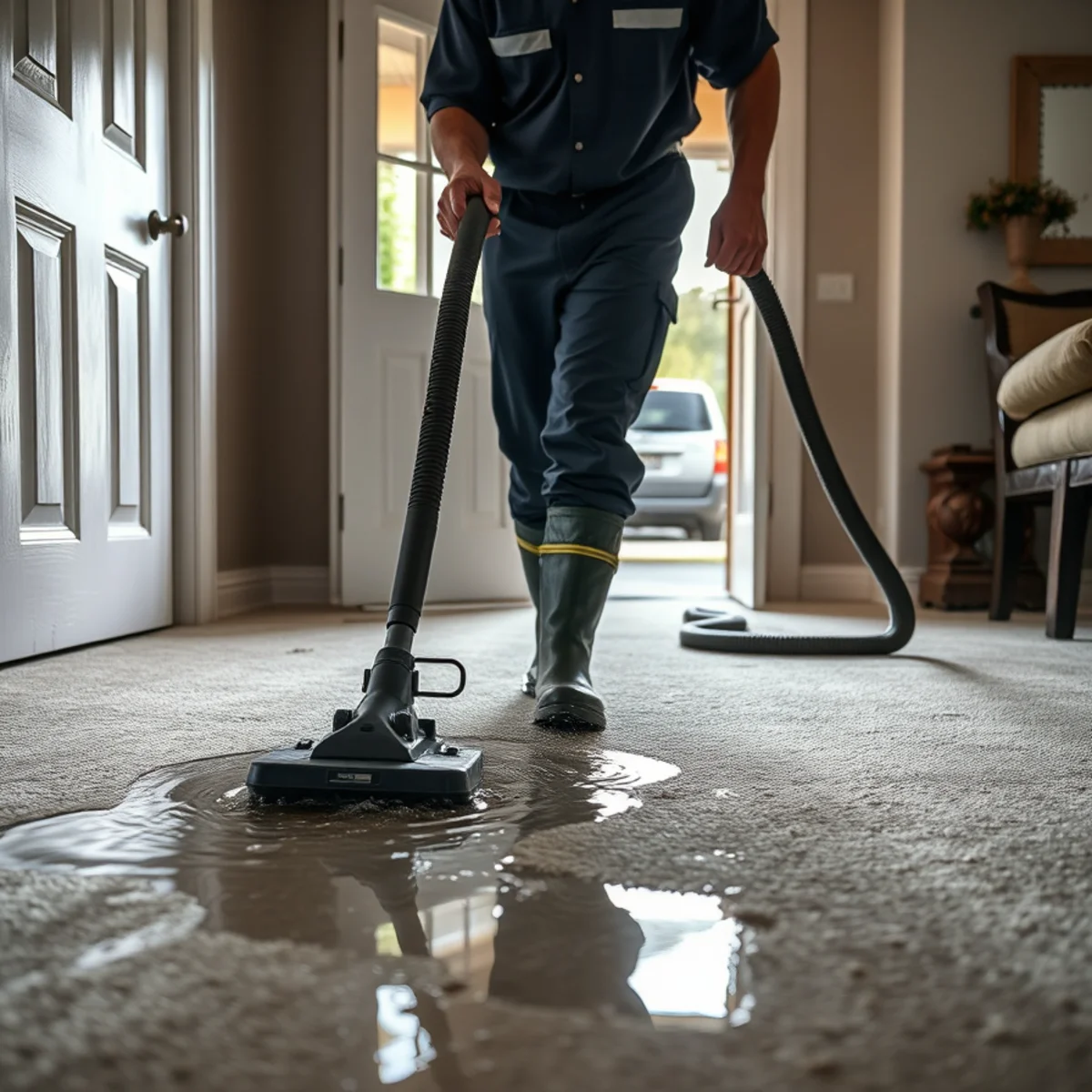
Truck-mounted extraction that pulls hundreds of gallons an hour — the single highest-leverage hour of the entire job.
Learn moreMetered, documented drying to a real dry standard — not a fan in the corner and a guess about Thursday.
Learn moreGround and storm water is contaminated by definition — we clean it to Category 3 protocol, not like a spilled bathtub.
Learn moreCategory 3 water handled the way it has to be — containment, PPE, HEPA filtration, and verified decontamination.
Learn moreWhat Neighbors Say
Sample content. These are illustrative examples, not customer reviews. Replace them with verified reviews from your Google Business Profile before launch — see src/data/testimonials.ts.
“A supply line let go in the upstairs bathroom of our 1920s place around midnight. Someone actually answered the phone, walked me to the shut-off in the dark, and had a crew here inside the hour. They saved the fir floors, which I had written off.”
“The crawl space had been wet for years and we had no idea. They found it, dried it, put in a vapor barrier, and explained exactly why our downspouts were the actual culprit. No upsell to anything we did not need.”
“Sewage backup in the downstairs unit during a storm. They set containment before touching anything, documented every step for the insurance company, and the claim went through without a single argument.”
Keep Exploring
Typically 12–20 minutes down University.
94710
View areaTypically 15–22 minutes via Gilman or Hopkins.
94702
View areaTypically 12–20 minutes straight down University.
94710 · 94702
View area Berkeley Local
8 min read
A hundred-year-old house has a hundred-year-old plumbing system and a crawl space nobody has looked at. Both are fixable before they are urgent.
Read article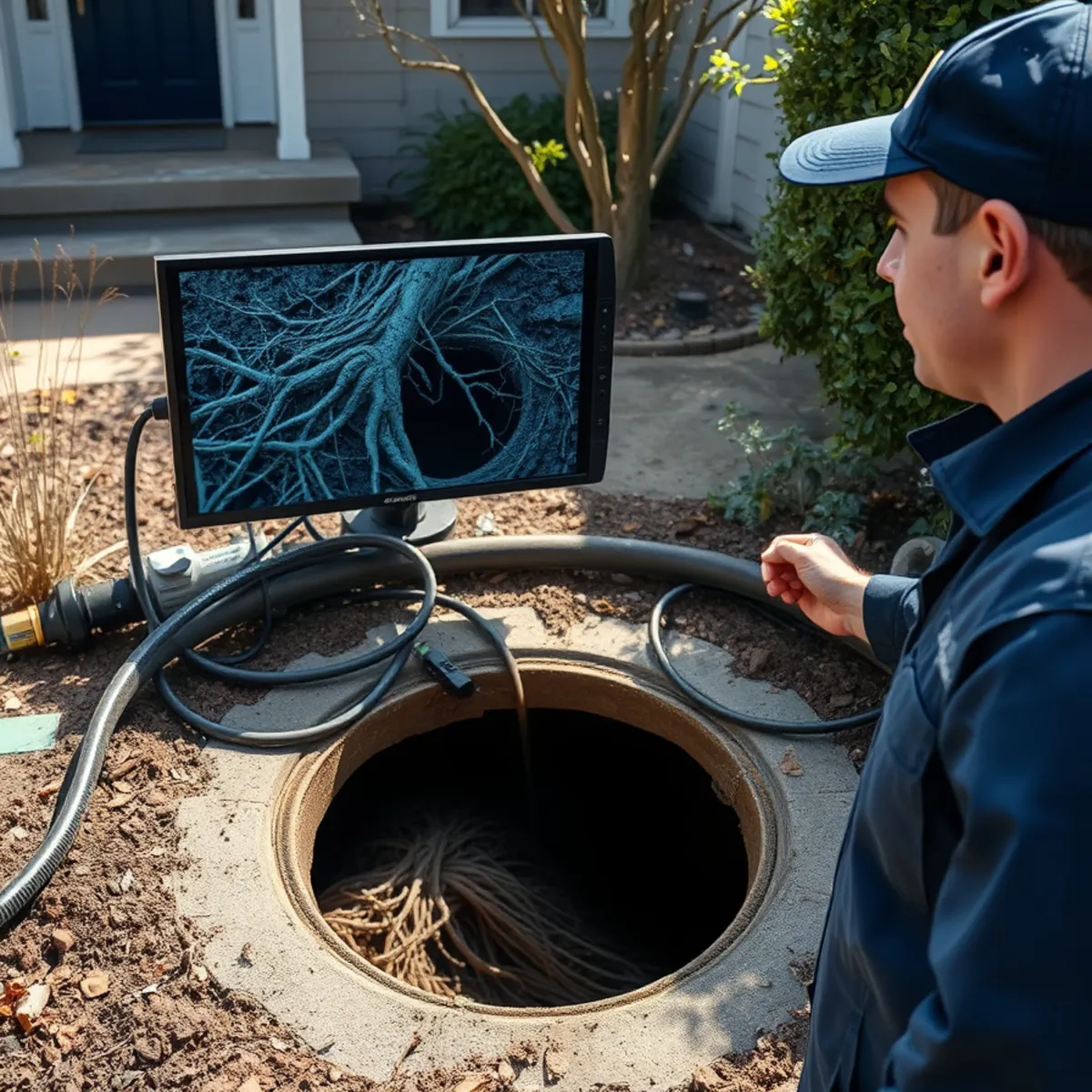 Berkeley Local
6 min read
Most Berkeley homeowners learn that the lateral is theirs on the worst possible day. Here is what to know before that day.
Read articleTypically 15–22 minutes via Gilman Street. A live local dispatcher answers day or night. Free inspection, written estimate, and we bill your insurance directly.