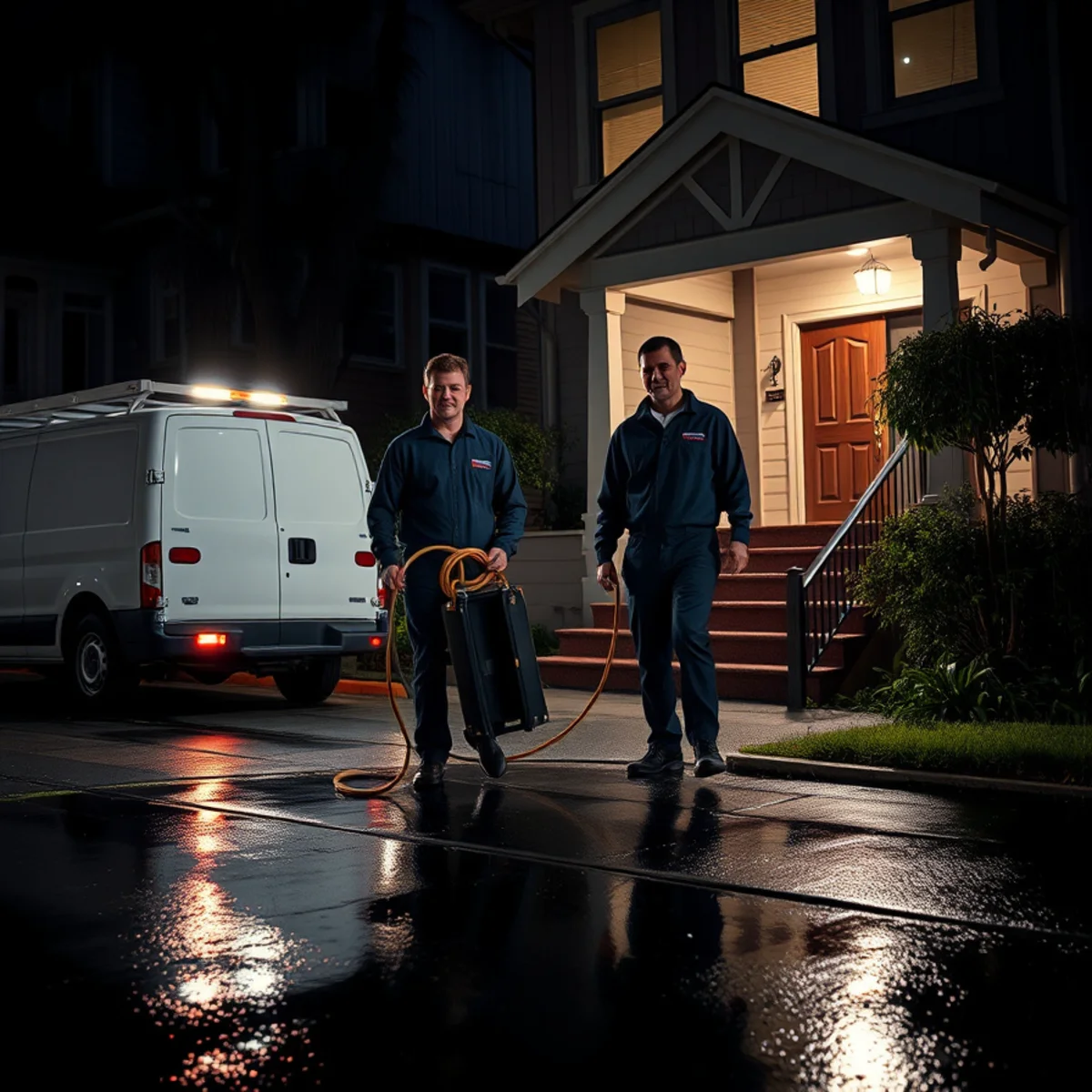
24/7 Emergency Service
A live local dispatcher every hour of the year, and a crew at your door in 60–90 minutes anywhere in Berkeley.
Learn more
24/7 Emergency
(201) 277-9344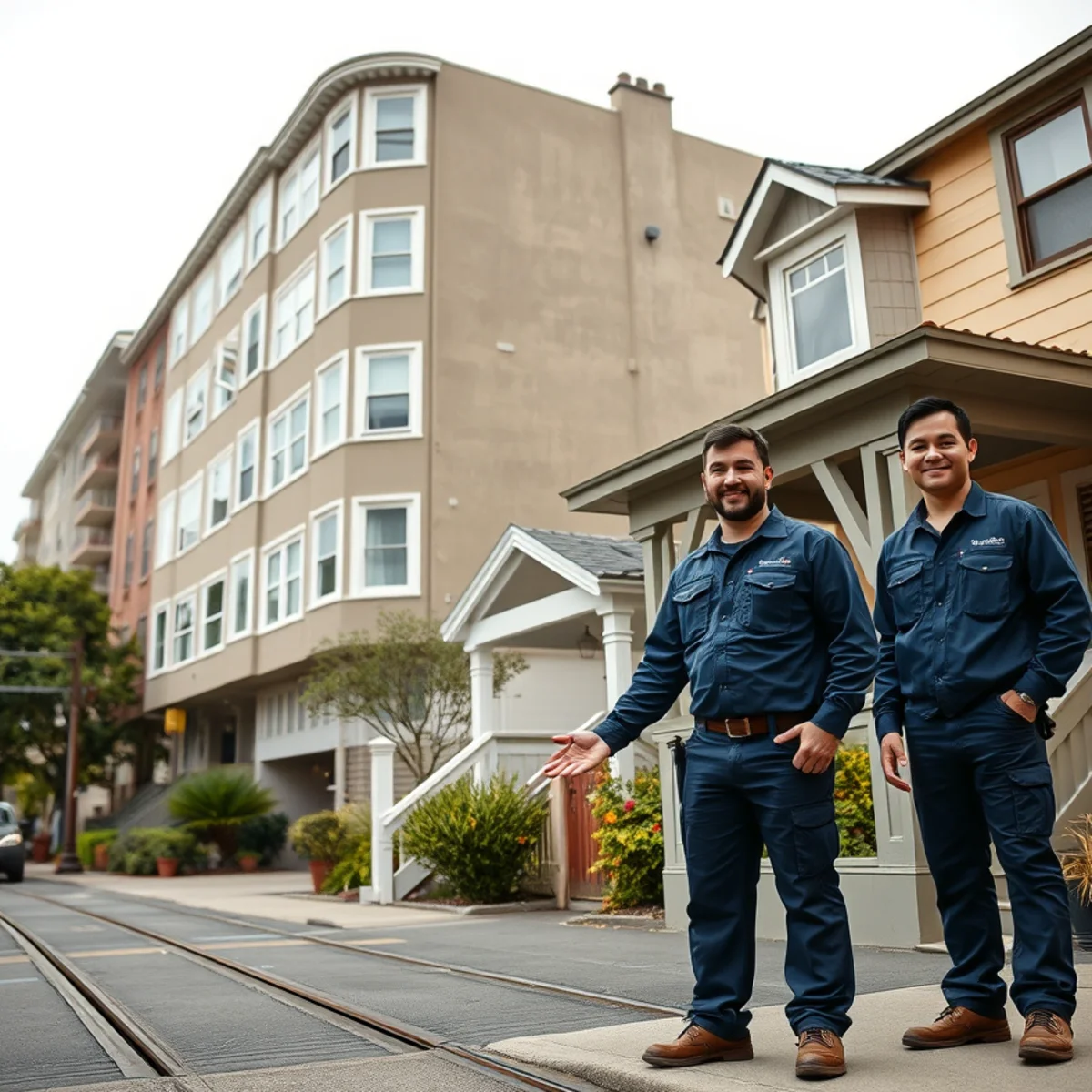
Adeline Corridor · 24/7 Emergency Service
That produces an unusual mix of losses on the same street: sprinkler discharges and stacked-plumbing failures in new construction one week, a hundred-year-old clay lateral backing up the next.
We are down Adeline in twelve to twenty minutes.
In the new multi-family stock, the dominant risks are the ones that come with height and density. Fire sprinkler discharge — usually accidental, from impact or a failed head rather than fire — puts twenty to thirty gallons a minute through a building until someone closes the riser valve. Stacked plumbing chases mean a supply failure on an upper floor drops through every unit below it.
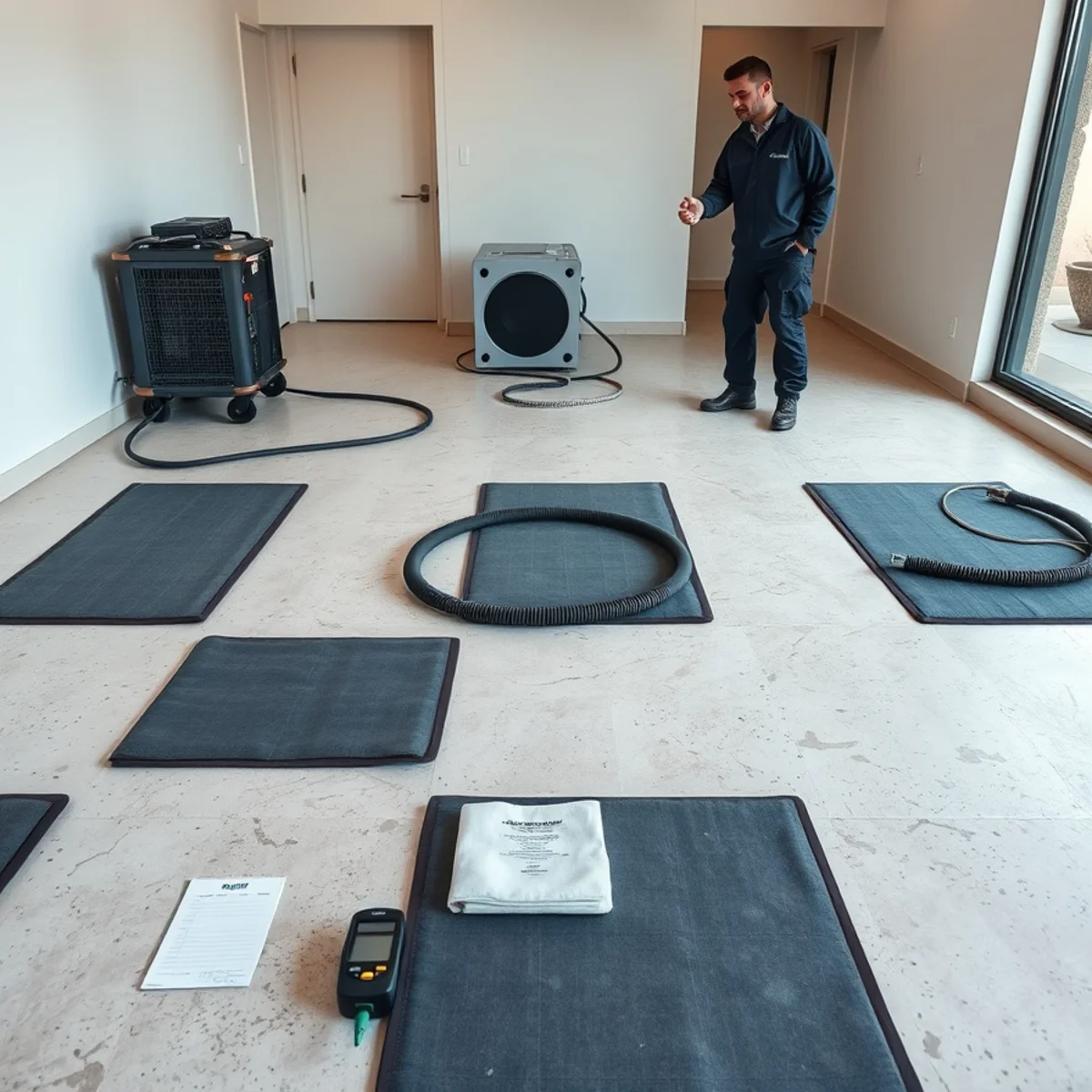
Those buildings also use concrete and gypcrete floor assemblies, which hold moisture far longer than wood framing and need specialty drying equipment and a longer schedule than most owners expect.
In the century-old stock, it is the South Berkeley story: original clay laterals with root intrusion and storm-season infiltration, and galvanized supply pipe at end of life.
The corridor also carries the Ashby BART plaza and its surrounding hardscape, which sheds a large volume of surface water quickly during heavy rain.
For multi-unit buildings — new or old — the technical work is only half the job. The other half is coordination: tenant notice, access scheduling, keeping egress paths clear and compliant, and phasing work so habitable units stay habitable.
We provide separate documentation per affected unit, which is what prevents a six-unit loss becoming a six-month argument between the building policy and individual owner or renter policies.
For property managers running several buildings on this corridor we can set up a pre-authorized response agreement so a 2 a.m. call from a tenant results in a crew being dispatched immediately rather than waiting on an approval.
For the older single-family and converted housing, we handle plaster, old-growth fir and period trim the way we do everywhere else in pre-war Berkeley — dried patiently, repaired in kind.
The corridor puts century-old cottages and brand-new mixed-use buildings on the same street, and the two fail so differently that scoping one like the other wastes real money.
Two building eras, two equipment plans
Old housing has plaster, lath and crawl spaces. New construction has tight envelopes, concrete and fire-suppression systems. Neither dries like the other.
Sprinkler discharges are clean but enormous
A single head releases a lot of water fast and it goes straight down through floors. Speed of extraction matters more than anything else that day.
Old laterals under the older blocks
Storm-season backups remain the defining risk on the pre-war side of the corridor, and those are Category 3 from the first minute.
Twelve to twenty minutes straight down Adeline
A direct run from our shop, with the truck loaded for either building type.
Areas and landmarks we cover in and around Adeline Corridor:
Local Questions
Because modern construction is built to keep air and moisture from moving, and that works against you once water is inside. A tight envelope with continuous insulation and vapour control does not let a wet assembly breathe, so moisture that reaches a wall cavity or the underside of a floor stays there. Concrete and gypsum-concrete floor assemblies also release moisture very slowly. An old plaster-and-lath house is leaky by modern standards, which is a defect in every other respect and an advantage here. New buildings usually need more dehumidification, targeted cavity drying and a longer verification period.
Shut the system down at the riser — until that happens everything else is secondary. Then call, and start moving what can be moved off the floor on every level below the discharge, because sprinkler water is clean but there is a great deal of it and it travels straight down through floor assemblies. Do not switch on electrical equipment in affected areas. The good news is that Category 1 water caught quickly is the most recoverable loss there is; the risk is entirely in how long it sits before extraction starts.
Both, and we scope them differently because they fail differently. The pre-war side of the corridor has plaster over lath, raised foundations and original clay sewer laterals, so the common loss is a backup or a supply-line failure that soaks slowly. The newer mixed-use buildings have concrete assemblies, tight envelopes and fire-suppression systems, so the common loss is fast, clean and vertical. Bringing an old-house equipment plan to a new building, or the reverse, is how a dry-down stalls.
Services in Adeline Corridor
A live local dispatcher every hour of the year, and a crew at your door in 60–90 minutes anywhere in Berkeley.
Learn more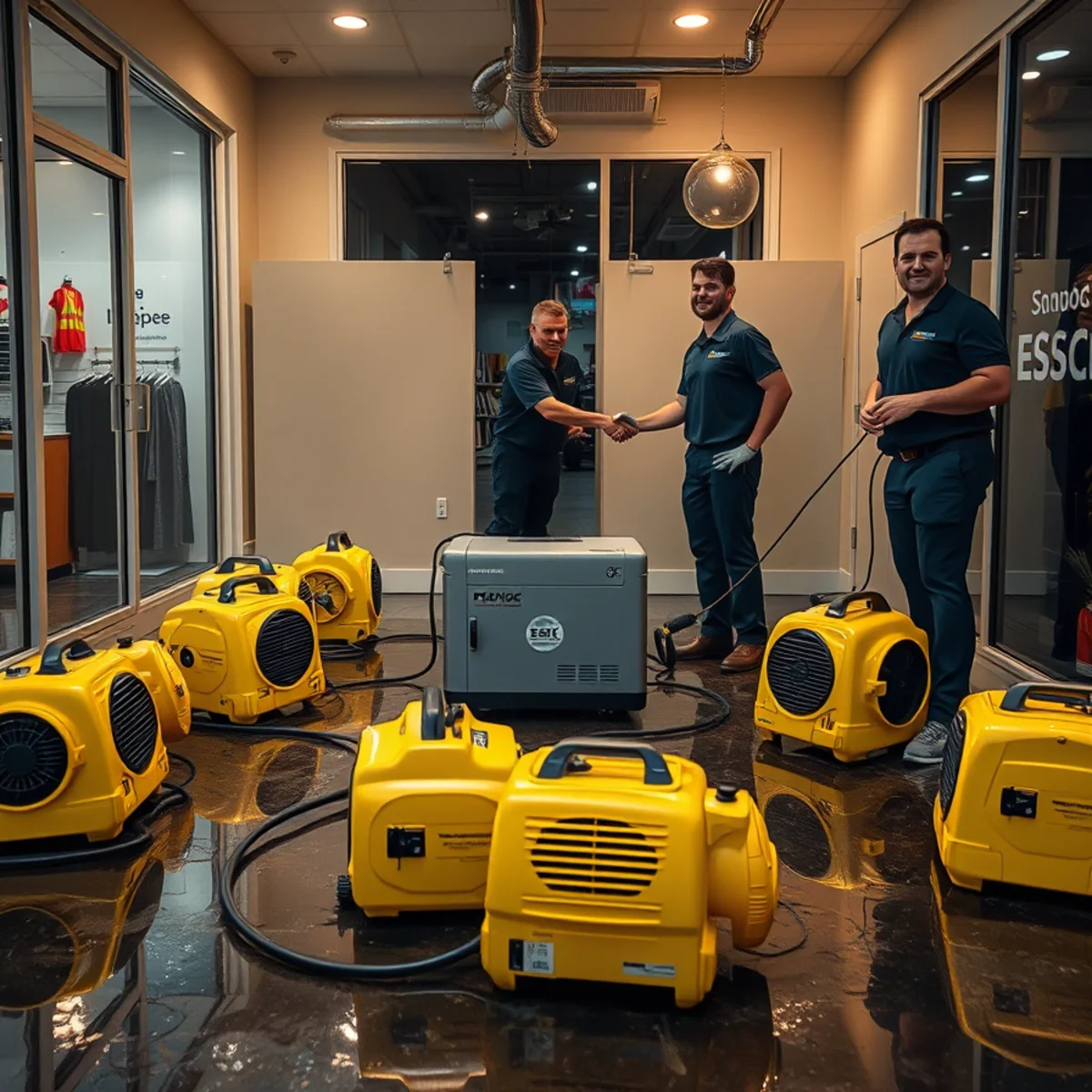
Every hour closed is revenue gone — we phase the work and run crews after hours to keep you trading.
Learn more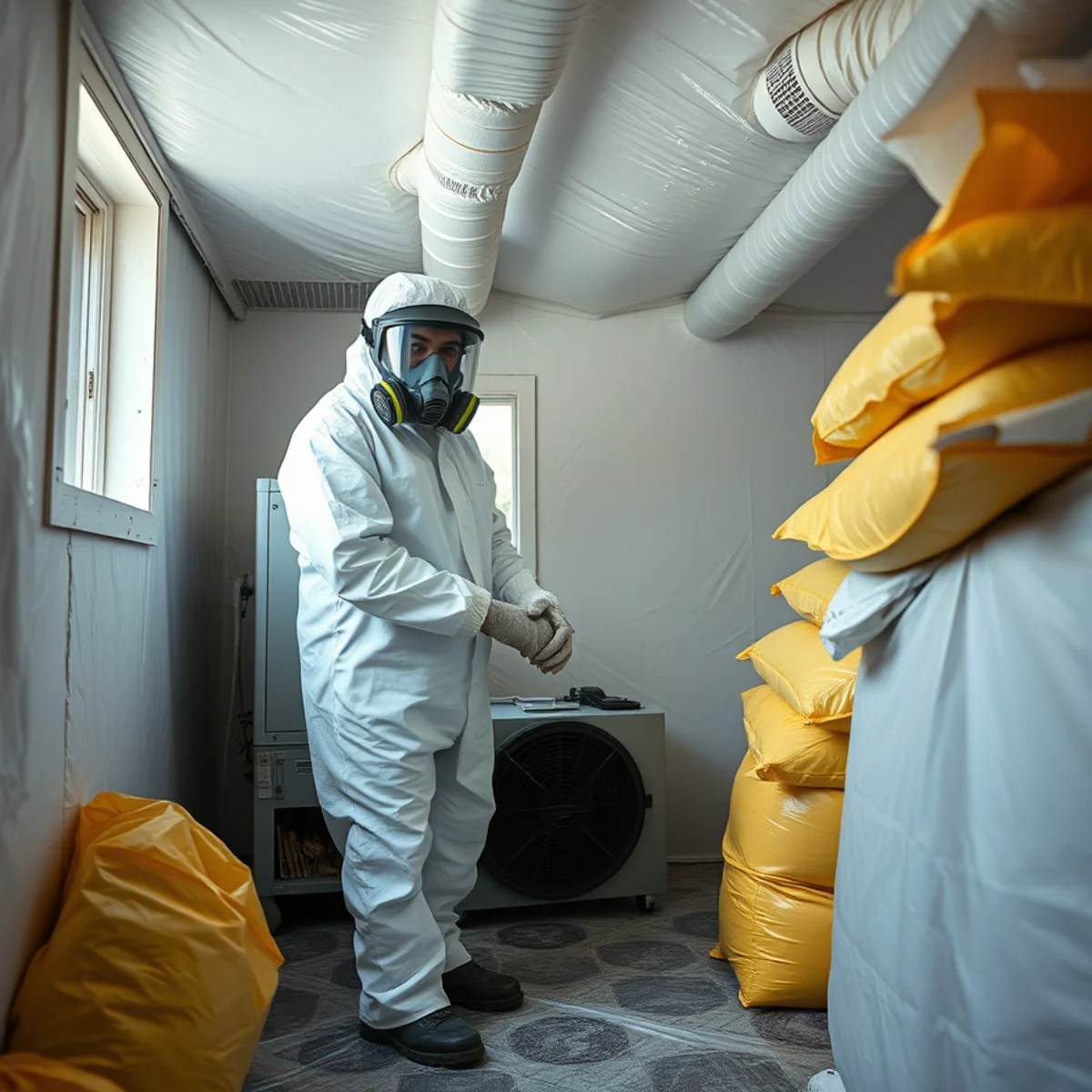
Category 3 water handled the way it has to be — containment, PPE, HEPA filtration, and verified decontamination.
Learn moreTruck-mounted extraction that pulls hundreds of gallons an hour — the single highest-leverage hour of the entire job.
Learn moreMetered, documented drying to a real dry standard — not a fan in the corner and a guess about Thursday.
Learn moreEnd-to-end recovery from the first phone call to the final repaint — extraction, drying, sanitizing, and rebuild under one crew.
Learn moreWhat Neighbors Say
Sample content. These are illustrative examples, not customer reviews. Replace them with verified reviews from your Google Business Profile before launch — see src/data/testimonials.ts.
“A supply line let go in the upstairs bathroom of our 1920s place around midnight. Someone actually answered the phone, walked me to the shut-off in the dark, and had a crew here inside the hour. They saved the fir floors, which I had written off.”
“The crawl space had been wet for years and we had no idea. They found it, dried it, put in a vapor barrier, and explained exactly why our downspouts were the actual culprit. No upsell to anything we did not need.”
“Sewage backup in the downstairs unit during a storm. They set containment before touching anything, documented every step for the insurance company, and the claim went through without a single argument.”
Keep Exploring
Typically 12–20 minutes down Adeline or Shattuck.
94703
View areaTypically 12–20 minutes down Shattuck or Sacramento.
94703 · 94702 · 94705
View areaTypically 10–18 minutes — this is our own back yard.
94703 · 94704
View area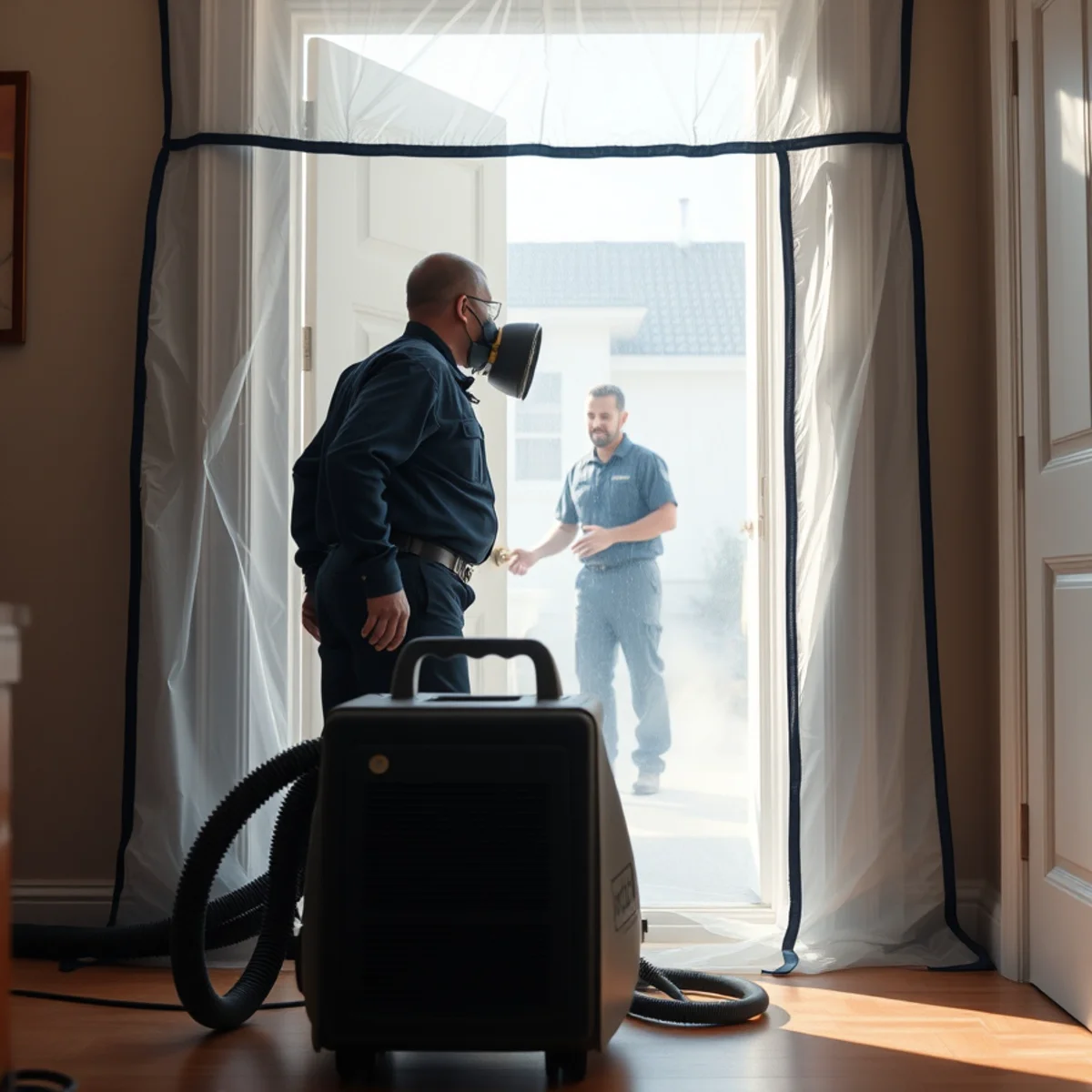 Mold & Health
7 min read
Testing tells you what and how much. Remediation removes it. Knowing which one you need first saves most people a few hundred dollars.
Read article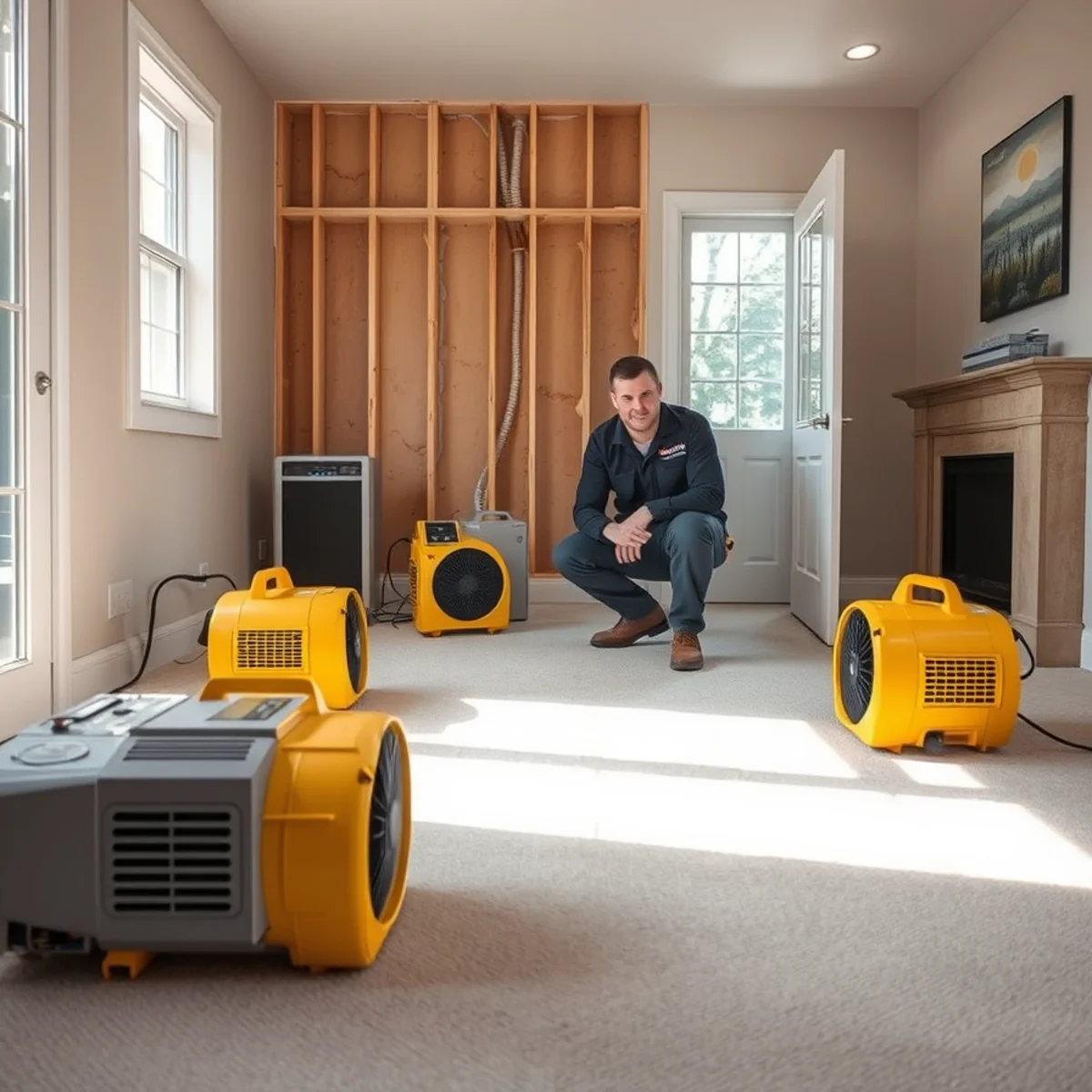 Process & Education
7 min read
Most dry-downs run three to five days. The ones that go wrong are the ones that were stopped by a calendar instead of a meter.
Read articleTypically 12–20 minutes straight down Adeline. A live local dispatcher answers day or night. Free inspection, written estimate, and we bill your insurance directly.