Structural Drying
Metered, documented drying to a real dry standard — not a fan in the corner and a guess about Thursday.
Learn more
24/7 Emergency
(201) 277-9344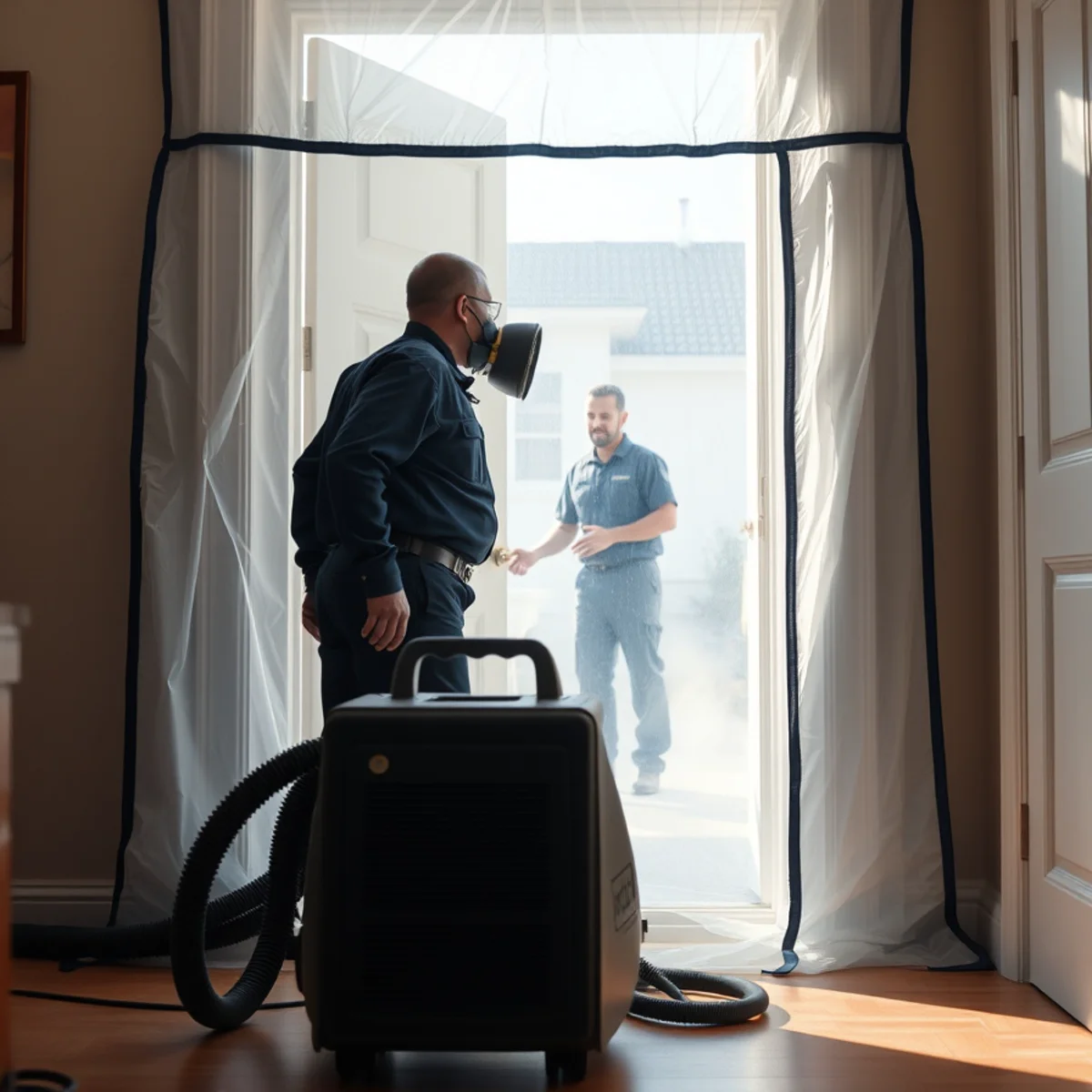
24/7 Emergency Service
That is how we approach it: find the moisture source, fix it, then remediate under containment so the removal itself does not spread spores through the rest of the house. Remediation without the moisture fix is a temporary and expensive cosmetic exercise.
Berkeley gives mold a lot to work with. A long wet season, a persistent marine layer, vented crawl spaces under nearly every pre-war house, and original single-pane windows that condense all winter. We find mold here in buildings that never had a single dramatic water event.
Warning Signs
That odor is microbial volatile organic compounds — the gas mold releases as it grows. If you smell it, it is there, even if you cannot find it.
Congestion, headaches, itchy eyes, or a cough that clears up on vacation and comes back the day you get home.
Black, green, or brown patches. Colour tells you very little about species and nothing about risk — all of it needs removal.
Chronic surface moisture. Very common in Berkeley single-pane sash windows and on north-facing exterior walls.
Moisture behind the finish. There is frequently growth on the back side of the material before anything shows on the front.
The single most common origin story. A dishwasher leak someone mopped up two years ago, still growing inside the cabinet base.
How It Works
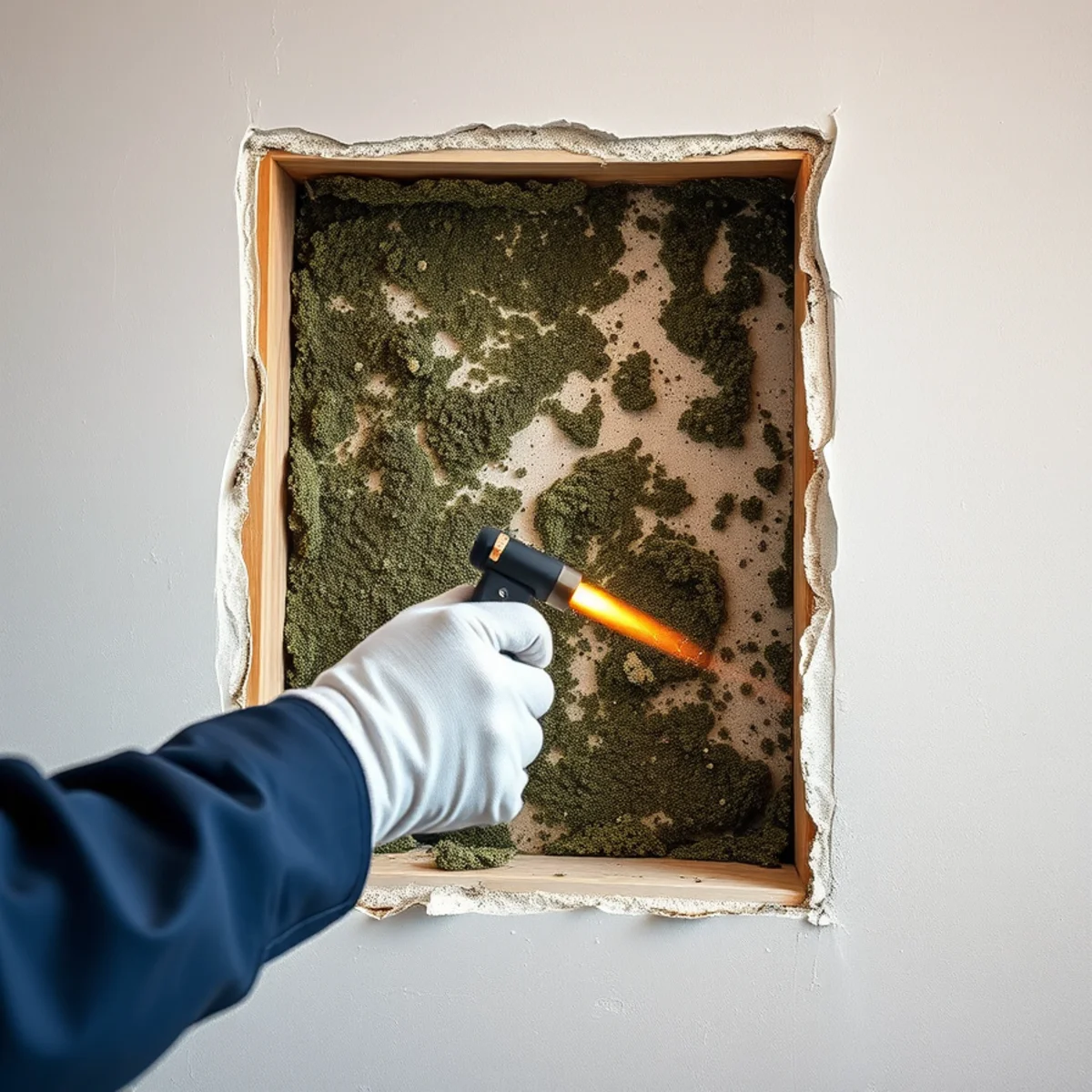
Visual survey, moisture meters, thermal imaging, and — where warranted — a borescope to see inside a wall cavity without opening it. We are looking for the water source as much as the growth.
Air sampling and surface sampling through an accredited lab. We are candid about this: if there is visible growth, testing rarely changes what has to happen. It matters most for hidden growth, for verifying a job afterwards, and for documenting a dispute.
Poly barriers, sealed openings, and a HEPA-filtered negative air machine. Air leaves the containment through a filter and never travels into clean space.
Affected porous material is cut out and bagged inside containment. Semi-porous and non-porous surfaces are HEPA-vacuumed and cleaned. We remove material rather than trying to bleach it — surface treatment of a porous substrate does not work.
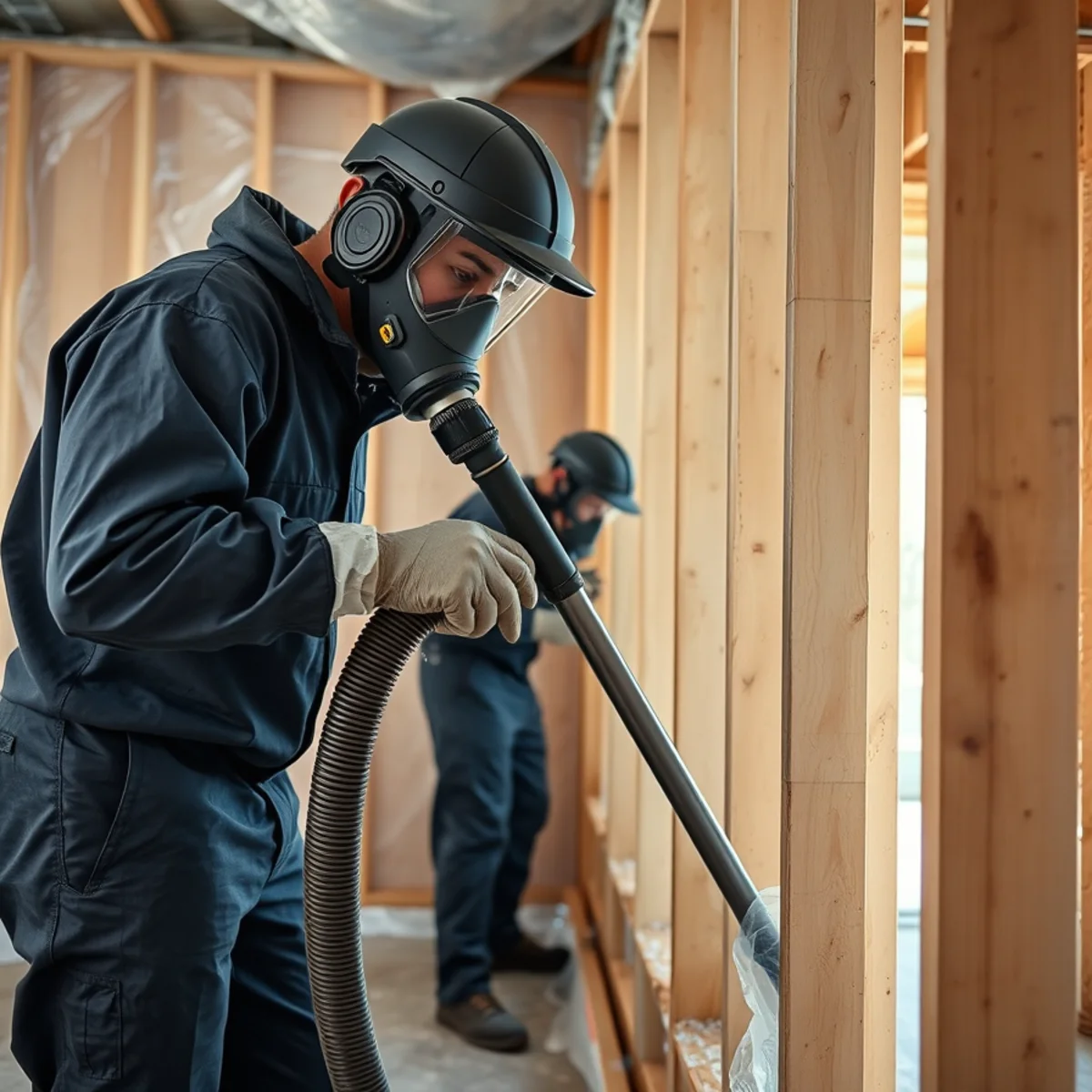
Every surface inside containment, including the framing, gets HEPA-vacuumed and wiped. Air scrubbers run through the entire job and beyond it.
Plumbing repair, drainage correction, ventilation, vapor barrier, exhaust fan. Without this, remediation is a countdown.
The area is dried to standard, then verified — visually and, where the job warrants it, by third-party post-remediation testing.
Replacement drywall, insulation, trim, and paint. Where the location justifies it, we rebuild with mold-resistant materials.
Mold spores are already in your house. They are in every house — they arrive on shoes, through open windows, on the dog. They are inert and harmless until they get three things at once: moisture, an organic food source, and time.
A wet building supplies all three immediately. Drywall paper, wood, dust, and the cellulose in insulation are all food. Once material stays wet, colonization typically begins within 24 to 48 hours, and visible growth follows within a few days.
That window is the entire reason we push hard on response time. Water damage caught and dried inside 24 hours is a drying job. The same loss found a week later is a drying job plus a containment, a remediation, and a rebuild — routinely several times the cost.
After enough jobs in this city, the list gets predictable.
Crawl spaces are the number one location, and most owners have never been in theirs. A vented crawl space under a pre-war house, with bare soil and no vapor barrier, pumps ground moisture into the floor structure all winter. Under-sink cabinets are second — a slow supply-line drip inside a closed box is the ideal incubator. Behind bathroom tile, especially in original 1920s installations where the substrate is mortar over lath and the grout has failed.
North-facing exterior walls get very little sun and stay cool, which drives condensation on the inside surface during the wet season. Window sills and sash channels on original single-pane windows collect condensate every cold night. And behind furniture on exterior walls — a bookcase against a cool wall blocks airflow and creates a permanently damp microclimate.
The Berkeley Hills add one more: homes cut into a slope with living space against an uphill retaining wall. Hydrostatic pressure pushes moisture through the concrete continuously, not just when it rains.
California disclosure duty
Under state law, sellers and landlords must disclose known mold conditions that affect health. Documented remediation protects you at sale.
No state licence for mold work
California does not licence mold remediation specifically. That makes IICRC S520 certification and third-party clearance testing the only real quality signal — ask any contractor for both.
Because California licences no one specifically for mold work, this is the service where the gap between a competent firm and an expensive one is widest — and hardest for a homeowner to see. These are the things worth checking, in us or anyone else.
Certified to S520, the actual standard
The mold remediation standard exists and is published. We work to it and document to it, which in an unlicensed field is the only meaningful credential there is.
We fix the moisture source, not just the growth
Remediation without correcting what fed it simply resets the clock. Finding the leak, the drainage fault or the crawl-space vapour problem is part of the job, not a separate quote.
Independent clearance testing
We encourage a third-party test after remediation rather than grading our own homework. If a contractor resists an independent clearance, that tells you something.
Honest about what does not need remediating
Some surface growth on a bathroom ceiling is a cleaning job and a fan problem, not a containment job. We will say so — an inflated mold scope is the oldest upsell in this industry.
Honest Pricing
Under about 10 square feet is often a contained, one-day job. Larger areas need full containment and multi-day work.
An open wall is straightforward. A crawl space, an attic, or growth inside a wall cavity behind cabinetry is slow, confined work.
Drywall is cheap to remove and replace. Custom cabinetry, hardwood, and plaster are not.
Lab analysis and independent post-remediation verification add cost, and are worth it on larger jobs or anything heading into a real estate transaction.
Correcting the moisture source can range from a $200 supply line to regrading and drainage work. We separate it on the estimate so you can see it clearly.
Insurance treatment varies. Mold that results from a covered sudden loss — a burst pipe you reported promptly — is often covered, frequently with a sub-limit around $10,000. Mold from long-term seepage or deferred maintenance is almost always excluded. Reporting the original water loss promptly is what keeps this door open.
Questions
Often not. If there is visible growth, testing does not change the remediation — the material still has to come out. Testing earns its keep when you can smell mold but cannot find it, when you need to verify a completed job, or when you are documenting a landlord or real estate dispute.
Stachybotrys chartarum gets the headlines, but colour is a poor guide to risk and you cannot identify a species by looking at it. What matters is that any significant indoor growth is a health concern for people with asthma, allergies, or compromised immunity — and that all of it gets remediated the same way regardless of species.
On a non-porous surface like tile or glass, bleach will kill surface growth. On drywall, wood, or insulation it does not work — it cannot reach the hyphae growing inside the material, and the water in it can make things worse. Porous material with growth gets removed, not treated.
It depends entirely on the cause. Mold following a sudden, covered water loss that you reported promptly is often covered, usually under a sub-limit. Mold from a slow leak, humidity, or maintenance issues is typically excluded. This is why reporting water damage immediately matters even when the leak seems small.
A small contained job is one to two days. A larger remediation with clearance testing runs three to five days, plus rebuild. Containment stays up until verification passes.
What Neighbors Say
Sample content. These are illustrative examples, not customer reviews. Replace them with verified reviews from your Google Business Profile before launch — see src/data/testimonials.ts.
“A supply line let go in the upstairs bathroom of our 1920s place around midnight. Someone actually answered the phone, walked me to the shut-off in the dark, and had a crew here inside the hour. They saved the fir floors, which I had written off.”
“The crawl space had been wet for years and we had no idea. They found it, dried it, put in a vapor barrier, and explained exactly why our downspouts were the actual culprit. No upsell to anything we did not need.”
“Sewage backup in the downstairs unit during a storm. They set containment before touching anything, documented every step for the insurance company, and the claim went through without a single argument.”
Where We Provide This Service
Keep Reading
Metered, documented drying to a real dry standard — not a fan in the corner and a guess about Thursday.
Learn moreThe space nobody looks at, humidifying the whole house from below — pumped, dried, and sealed properly.
Learn moreEnd-to-end recovery from the first phone call to the final repaint — extraction, drying, sanitizing, and rebuild under one crew.
Learn more Mold & Health
6 min read
The 24-to-48-hour rule is real, but it is a starting gun rather than a deadline. What actually happens hour by hour.
Read article Berkeley Local
8 min read
A hundred-year-old house has a hundred-year-old plumbing system and a crawl space nobody has looked at. Both are fixable before they are urgent.
Read articleA live local dispatcher answers day or night, and we get a crew to most Berkeley addresses in 60 to 90 minutes. Free inspection, written estimate, and we bill your insurance directly.